
Secure Storage Near Cambridge, MA — What to Look For to Protect Your Belongings
Storing items near Cambridge, MA is more than locking a door — it’s about layered protection that prevents theft, avoids environmental damage, and keeps your possessions in good condition. This guide breaks down what “storage security” really means, why specific systems matter for locals, students, and small businesses, and how each feature translates into practical peace of mind. We cover core safeguards — surveillance, access control, perimeter protection, unit alarms, on-site staff, and climate control — explain how they work together, and give you a simple checklist of what to inspect on a site visit. Along the way you’ll find packing, documentation, and insurance tips plus a decision framework to help you pick the right secure storage near Cambridge. We also call out modern trends like mobile access and individual-unit alarms so you can evaluate facilities with confidence.
Secure Storage Solutions with Smart Penny Moving Near Cambridge, MA
Essential security features combine monitoring, access controls, physical barriers, alarms, staffed oversight, and environmental systems to lower risk and protect stored items. Each element targets a different threat: cameras deter and document incidents, access systems limit entry, fences and lighting reduce hiding spots, unit alarms notice tampering, on-site staff enforce rules and respond, and climate control prevents damage from humidity and temperature swings. In Cambridge’s busy neighborhoods — with students, commuters, and dense housing — a layered approach is especially important for predictable protection. The sections below explain surveillance and access systems so you know what to check for coverage, retention, and practical value during a visit.
These components together form a clear security strategy:
- 24/7 video surveillance offers continuous deterrence and recorded evidence.
- Access control (gates, keypads, mobile credentials) tracks and restricts who enters.
- Perimeter fencing and good lighting reduce concealment and increase visibility.
- Individual unit alarms catch tampering right at the door.
- On-site staff enforce policies and respond to incidents quickly.
Layering these measures makes unauthorized access and loss much less likely. The next section explains how video systems deliver that protection in practice.
How Does 24/7 Video Surveillance Protect Your Stored Belongings?
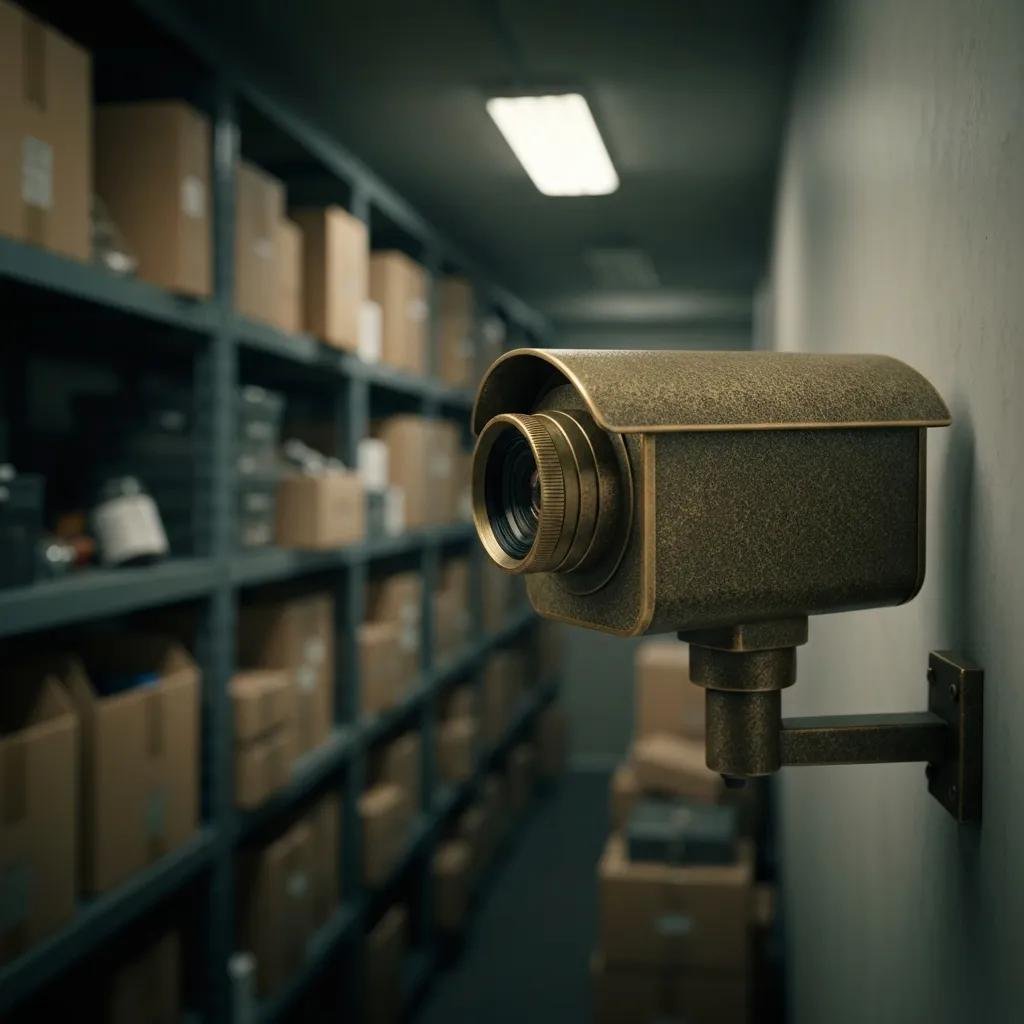
Round-the-clock video surveillance protects your items by providing visible deterrence, continuous observation, and recorded evidence for investigations or insurance claims. Cameras placed at gates, loading areas, and hallways reduce blind spots and create a timestamped record that discourages opportunistic theft and helps reconstruct events if something happens. Ask about retention policies — how long footage is kept — and whether feeds are actively monitored or only recorded. Knowing if a facility has monitored cameras versus recording-only systems tells you how quickly incidents get noticed and how useful footage will be for authorities or insurers.
Once you know the basics about cameras, the next step is evaluating access control and how facilities restrict entry.
What Role Do Access Control Systems Play in Storage Security?
Access control determines who can get into the facility and produces an audit trail of activity, which reduces unauthorized entry and aids investigations. Typical systems include gated entry with keypad codes, mobile-access credentials, and visitor logs; some facilities add time-limited codes or biometric options for higher security. Those logs show who entered and when, helping spot suspicious patterns and limit access after hours or during service calls. Good customer practices are simple: keep codes private, register anyone you authorize, and confirm how visitor access is handled to balance convenience and security.
To see how these general protections map to a local provider, the next section looks at how Smart Penny Moving implements storage security near Cambridge.
How Does Smart Penny Moving Ensure Secure Storage Near Cambridge, MA?
Smart Penny Moving builds its storage offering around common security priorities: continuous surveillance, climate control, gated access, and unit-level protections, together with straightforward pricing to make decisions easier. Their customer promise — to provide comprehensive, stress-free moving solutions — extends to storage: practical features such as 24-hour surveillance and temperature control are designed to keep belongings safe. When you evaluate any provider, match what’s advertised to day-to-day operations; the table below shows how Smart Penny Moving translates common security elements into real-world protections so you can judge fit for your needs.
What Advanced Surveillance Technologies Does Smart Penny Moving Use?
Smart Penny Moving lists 24-hour surveillance as a core feature, which signals ongoing recording and deterrence. While exact camera models aren’t specified in the facility overview, continuous monitoring usually means footage is available for incident review and insurance support. Ask about retention windows, whether feeds are watched in real time, and how the facility notifies customers or authorities about suspicious activity. Those details turn a general surveillance claim into a measurable level of protection affecting prevention and recovery.
With surveillance practices understood, it’s easier to evaluate perimeter controls and unit-level alarms, which the company also highlights.
How Do Gated Entry and Individual Unit Alarms Enhance Security?
Gated entry is the first checkpoint — it channels arrivals through monitored points and reduces casual pedestrian or vehicle access. Individual unit alarms are the last line of defense, alerting staff or a monitoring service to tampering at the unit itself so response can happen before a loss grows. Together, gates and unit alarms form layered protection: the gate discourages casual intruders while alarms catch direct attempts on stored items. When evaluating a facility, confirm gates are secured after hours and ask how alarms are handled so you understand real-world response times.
Seeing how these pieces fit together leads naturally to environmental protections — especially climate control — which preserves items and lowers another common source of loss.
Why Is Climate-Controlled Storage Important for Security and Preservation?
Climate-controlled storage keeps temperature — and often humidity — steady to prevent environmental damage. That directly preserves item condition and indirectly supports security by reducing disputes and preventing secondary losses like mold or corrosion. Sensitive goods — wood furniture, electronics, photos, and important papers — can warp, corrode, or grow mold when exposed to New England’s temperature and humidity swings. Stable conditions slow deterioration and make it less likely an item becomes a total loss. The sections below explain how climate systems work and how they improve both preservation and insurance outcomes.
How Does Temperature Control Prevent Damage to Stored Items?
Temperature control reduces damage by limiting expansion and contraction, preventing mold growth, and cutting condensation that causes corrosion or staining on wood, paper, and metal. For instance, repeated humid-warm followed by cold-dry cycles can warp wood, while moisture accelerates corrosion in electronics. Choose climate-controlled units for sensitive items, use breathable covers for furniture, and avoid placing items directly on concrete floors to limit moisture transfer. Those precautions, paired with regulated climate settings, significantly extend items’ lifespans.
Reliable environmental controls also lead to clearer insurance outcomes and fewer disputes, as the next section describes.
Can Climate Control Contribute to Overall Storage Security?
Yes. Climate control reduces the chance of environmental claims, makes spaces less attractive to pests, and preserves evidence quality if an incident occurs. When items stay dry and intact, insurers can more easily determine cause and value, which speeds claims and reduces disputes. Facilities that track setpoints and maintain HVAC systems usually show stronger operational practices and faster responses. Ask about temperature ranges, maintenance schedules, and HVAC alarm procedures to see how climate control fits into a facility’s broader security posture.
What Are the Best Practices for Maximizing Your Storage Security?
Maximizing security starts with picking the right unit, documenting and protecting belongings, and carrying adequate insurance. Begin with a clear inventory, use quality packing materials, and choose a unit size that avoids overcrowding — clutter can hide damage and make inspections harder. Use strong locks and consider redundancies for high-value items (for example, a disc lock plus a unit alarm). For irreplaceable valuables, consider off-site options like a bank safe deposit box. The subsections below give practical packing steps and insurance guidance so you can act with confidence.
Here’s a practical pre-storage checklist:
- Document Everything: Photograph items and note dates and serial numbers.
- Use Proper Packing: Wrap delicate pieces in acid-free materials and pack in sturdy boxes.
- Choose the Right Unit: Pick climate control for sensitive goods and the right size to avoid compression damage.
- Secure with Quality Locks: Use tamper-resistant disc or cylinder locks and consider unit alarms for high-value items.
How Should You Pack Valuables for Secure Storage?
Packing valuables the right way reduces damage, simplifies inventories, and strengthens any future insurance claim. Use acid-free tissue and breathable wraps for artwork and papers, padded blankets for furniture, and anti-static bags for electronics. Avoid sealing wood or leather in plastic that can trap moisture. Photograph items, keep serial numbers in a separate digital file, and store inventory records in at least two places — with you and offline — so they survive an incident. Combining careful packing with documentation increases preservation and the odds of a successful claim if needed.
Proper packing naturally leads to evaluating insurance options, which we cover next.
What Storage Insurance Options Are Available Near Cambridge, MA?
Insurance typically comes as facility-offered coverage or an extension of your renters’ or homeowners’ policy. Facility policies are convenient but may limit coverage for high-value items or certain perils (for example, flood). Third-party policies can extend existing coverage to stored goods and sometimes offer broader protection. Compare covered perils, replacement versus actual cash value, deductibles, and how documentation or extra security features affect premiums. Keeping a detailed inventory and asking how a facility’s security measures factor into insurance recommendations helps match coverage to real risk.
What Are the Most Common Questions About Storage Security in Cambridge, MA?
Renters often ask how to verify security claims, whether cameras and alarms really help, and what signs point to a well-run facility. Verification should combine paperwork with an on-site visit: ask about surveillance retention, alarm response, access-control procedures, and staff hours. Cameras and alarms help, but their value depends on coverage, monitoring, and response protocols — presence alone isn’t enough. The sections below give a short verification checklist and a way to assess technology effectiveness.
How Can I Verify a Storage Facility’s Security Measures?
Use a short, practical checklist: request policy details, inspect physical controls, and observe staff and operations during a visit. Ask how long camera footage is kept, whether feeds are monitored or recorded-only, what alarm notification steps are, and if gate entries produce logs. On site, check fencing, nighttime lighting where possible, gate operation, and unit door condition. Ask staff about past incidents and how they were handled. Combining questions with an in-person inspection gives a clear picture of whether a facility’s security actually works.
- Ask about surveillance retention and whether feeds are monitored.
- Request a demonstration of gate/access control and ask about code rotation.
- Inspect lighting, fencing, and unit door integrity during your visit.
Following these steps helps you verify claims and compare facilities objectively.
Are Storage Units with Cameras and Alarms More Secure?
Units with cameras and alarms are generally more secure, but effectiveness depends on correct placement, adequate retention, and a fast response plan. Cameras discourage casual theft and provide forensic evidence, yet gaps or short retention windows limit usefulness. Alarms alert to tampering but only help if someone responds quickly. Confirm whether alarms go to on-site staff, a monitoring company, or are recording-only, and ask about typical response times. When cameras and alarms are combined with solid perimeter controls, good lighting, and reliable locks, you get the strongest protection in practice.
How Can You Choose the Best Secure Storage Facility Near Cambridge, MA?
Choose a facility by matching security features to the value and sensitivity of your items, balancing convenience like location and access hours, and using a checklist to compare options. Rank must-haves first — surveillance, gated access, strong locks — then add nice-to-haves like climate control or unit alarms based on need. Consider trade-offs: a nearby facility may be more convenient, but a slightly farther location with better controls can lower risk for valuable items. The sections below prioritize features and explain how on-site management supports long-term safety.
What Security Features Should You Prioritize When Selecting a Storage Unit?
Prioritize features that fit your risk profile. For most people, strong locks, 24/7 surveillance, and gated access are essential. Climate control and unit alarms are critical for sensitive or high-value goods. Must-haves reduce common theft and vandalism: sturdy unit doors, disc-style locks, perimeter fencing, and visible cameras. Nice-to-haves — individual unit alarms, climate control, and mobile access logs — add protection for items that degrade or are especially valuable. Always make sure your insurance aligns with the security features you choose.
- Must-have: surveillance, gated access, solid locks.
- High-priority for valuables: climate control and unit alarms.
- Nice-to-have: mobile access logs, on-site management, well-lit loading zones.
Prioritizing features this way helps you compare facilities on equal terms.
How Does On-Site Management Improve Storage Safety?
On-site management improves safety by enforcing access rules, spotting unusual activity, keeping equipment working, and providing a human response when incidents occur. Staff deter theft by their presence, can verify alarms quickly, and handle routine maintenance (lighting, gates, HVAC) that supports long-term security. When evaluating a facility, ask about staffing hours, responsibilities, and escalation procedures so you know who responds and how fast. Facilities with steady on-site management typically show fewer operational gaps and faster issue resolution, which means better protection for your things.
As you finalize your decision, remember the operational promise customers expect: To provide comprehensive, stress-free moving solutions. Smart Penny Moving’s storage features — 24-hour surveillance, temperature control, gated entry, individual unit alarms, and pricing starting from only $125/month — show how a local mover can combine moving and storage to reduce friction while meeting basic security expectations. If you need bundled moving and storage, ask providers for combined quotes, detailed security specs, and how insurance is handled to ensure a smooth, well-protected experience.
Frequently Asked Questions
What should I look for when visiting a storage facility?
Focus on security and overall upkeep. Look for visible cameras, secure gate access, and a tidy, well-maintained site. Ask about on-site staff hours and how they respond to incidents. Check unit doors and locks, and review access-control and emergency procedures. A hands-on visit helps confirm the facility meets your expectations.
How can I ensure my items are protected from environmental damage?
Rent a climate-controlled unit for items sensitive to temperature and humidity, like electronics, wood furniture, and important papers. Use breathable packing materials and keep items off concrete floors to reduce moisture exposure. Check on your items periodically and keep an accurate inventory to make sure everything stays in good condition.
What are the benefits of using individual unit alarms?
Unit alarms add a focused layer of protection by alerting staff or a monitoring service when someone tampers with a door. That immediate detection can stop theft before it escalates and also deters would-be intruders. Ask how alarms are monitored and what the typical response process looks like before relying on them as your primary safeguard.
How does insurance work for stored items?
Insurance usually comes from the facility or as an extension of your renters’/homeowners’ policy. Facility policies are convenient but may limit coverage for high-value items or certain perils. Third-party policies can offer broader protection. Compare coverage limits, deductibles, exclusions, and whether documentation or security features affect premiums. Keep detailed records to support any claim.
What steps can I take to enhance my storage security?
Choose a facility with strong security features, photograph and inventory your items, and use quality packing supplies. Use tamper-resistant locks and consider unit alarms for valuable items. Check on your belongings regularly and keep an open line with facility staff about any concerns. These steps greatly reduce the risk of loss or damage.
Are there specific items that should not be stored in a storage unit?
Yes. Don’t store hazardous materials (flammables, chemicals, explosives). Avoid perishable food, which attracts pests, and live plants that need care. High-value jewelry or vital legal documents may be better stored in a bank safe. Always review the facility’s list of prohibited items before moving anything in.
Conclusion
Choosing a secure storage facility near Cambridge, MA means looking for layered protections — 24/7 surveillance, access control, and climate control — that deter theft and preserve your items. These features give renters and businesses the confidence that belongings will stay safe and in good condition. Start by comparing local providers, inspect their security details, and match coverage to your insurance needs. For a smoother moving and storage experience, consider contacting Smart Penny Moving for a free quote today.