Protect Your Valuables During Your Move
Moving high-value items takes a bit more planning than packing everyday boxes. This guide gives clear, practical steps to move jewelry, electronics, artwork, antiques, and fragile home goods with less risk—financially and emotionally. You’ll find how to inventory and appraise items, pick the right packing supplies, follow repeatable wrapping and cushioning methods, decide when to hire pros, and compare insurance and storage choices. Each H2 section breaks down the risks, the recommended supplies, hands-on packing techniques, and simple decision checklists so you can repeat the process and support any insurance claim. Along the way we call out easy, specific actions—labeling systems, anti‑static protection, climate tips, and secure transport options—so you can plan a safe move for your most important pieces. Read on for item-specific how‑tos, comparison tables of supplies and coverage, and short checklists to use on packing day.
Why Do Valuables Need Special Care When Moving?
Valuables face different risks than ordinary household items—breakage, theft, environmental damage, and misplacement—that regular packing won’t always stop. Handling high-value items correctly lowers replacement costs, preserves sentimental value, and creates documentation that helps with insurance claims. Treating these items separately also speeds up unpacking and cuts stress by keeping fragile pieces out of mixed boxes. Below we list the common risk types so you can prioritize protections for the things you own.
What threats should you plan for? This list summarizes the main ways valuables get damaged or lost during a move so you can apply focused protections before moving day.
- Physical breakage from drops, shifting in transit, or improper stacking during packing, loading, or unloading.
- Loss or theft when items aren’t inventoried, are packed loosely, or are left unattended during handoffs.
- Environmental exposure—humidity, temperature swings, or sunlight—that can warp wood, fade canvases, or harm finishes.
- Poor handling or incorrect disassembly that causes structural damage to antiques or framed works.
Each of these risks points to practical fixes—protective packaging, discreet labeling, and climate control—that the next subsection covers in more detail.
What Risks Do Valuables Face During a Move?
Valuables fall into four risk categories needing different countermeasures: mechanical shock, misplacement/theft, environmental damage, and improper handling during disassembly or transport. Mechanical shock affects ceramics, glass, and electronics when boxes are stacked without proper cushioning or bracing—padding and correct box orientation reduce that risk. Misplacement and theft often result from missing inventory systems or labels that call attention to valuables—discreet numbering and photo logs help. Environmental damage from humidity and temperature swings can ruin wood and paintings; climate control and sealed packing protect against this. Knowing these risks helps you decide whether to move items yourself, use our specialized services, or document items for insurance.
How Does Proper Handling Protect Financial and Sentimental Value?
Careful handling preserves both dollar value and emotional worth by preventing irreversible damage and creating evidence for claims. An inventory, appraisals, and timestamped photos document condition before transit, which makes valuation and any needed restoration easier. Correct packing and transport reduce repair or replacement costs and help maintain an item’s collector or heirloom status. That same documentation speeds dispute resolution with carriers or insurers—spending a little time on prep avoids a lot of downstream hassle and expense.
What Are the Best Packing Materials for Fragile and High-Value Items?
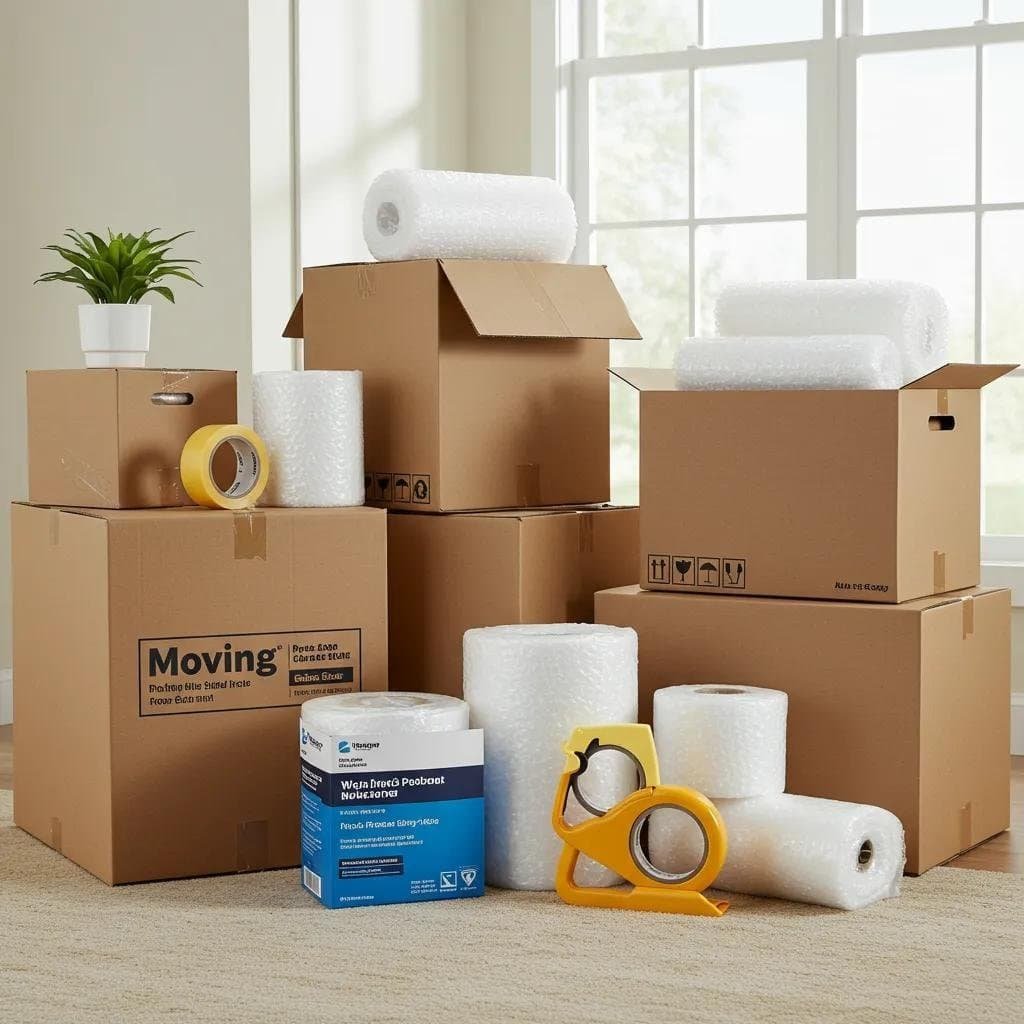
Picking the right packing materials keeps items safe from shock, moisture, static, and abrasion—and helps them sit securely in trucks or storage units. The basic rule: match the material to what could hurt the item—anti‑static wraps for electronics, moisture barriers for delicate papers and canvases, rigid crating for heavy antiques. Below is a practical list pairing supply types with common uses so you can build the right kit before packing day.
The list below explains essential packing supplies and when to use them.
- Bubble wrap (single and double layer): Single-layer for light protection; double-wrap for high-risk glass or fine ceramics.
- Anti-static bubble wrap: For circuit boards, monitors, and other sensitive electronics to prevent electrostatic discharge.
- Corrugated dish pack boxes with dividers: For plates, stemware, and small collections to prevent contact damage.
- Foam sheets and corner protectors: Shield picture frames, mirrors, and furniture edges from impact and abrasion.
- Packing paper and acid-free tissue: Wrap china and archival materials; avoid newsprint that can stain or transfer ink.
- Moving blankets and straps: Secure large pieces and add soft layers between items in vans or trucks.
- Custom crates and specialty art boxes: For high-value artwork and antiques that need rigid support and internal bracing.
These supplies cover most item types. The comparison table below helps you decide what to buy or request from pros.
Before the table: this comparison shows common packing supplies, their protective features, and recommended uses so you can match supplies to items quickly.
Summary: Match a supply’s protective features to an item’s vulnerabilities to avoid failures like edge crushing, moisture wicking, or electrostatic damage. For specialty needs—custom crates, art-grade boxes, or climate packaging—professionals can supply materials and expert installation.
Smart Penny Moving offers packing services and can provide specialty materials like custom crates and professional-grade foam—an easy option if you’d prefer contractors to source and apply these materials.
Which Packing Supplies Are Essential for Fragile Items?
Fragile items need both structural protection and void-fill to stop movement inside boxes. Start with corrugated dish packs and dividers for plates and stemware, wrap each piece in packing paper or acid-free tissue, then add a layer of bubble wrap for extra shock resistance. For small collectibles, use foam pouches or compartmentalized boxes so pieces stay separated and cushioned under weight. Always double-box especially fragile or high‑value items: the inner box holds the item, the outer box provides a rigid shell with void-fill between them. Proper packing reduces the chance that stacking or jostling will concentrate force on delicate surfaces.
How Do Custom Crates and Specialty Boxes Protect Artwork and Antiques?
Custom crates give a rigid, dimensionally stable enclosure that prevents movement and spreads shock across the crate rather than the item. Crates can include interior shock mounts, padded channels, and integrated bracing to secure frames and odd shapes—making them ideal for paintings, sculptures, and large antiques. Specialty art boxes add acid-free backing, humidity buffers, and sometimes thermal insulation to guard against temperature swings. Though pricier than standard boxes, custom crating significantly reduces risk for irreplaceable pieces; often the cost is smaller than restoration or replacement.
How Do You Pack Fragile Items Like Glassware, China, and Collectibles Safely?
Packing fragile household items is a step-by-step process of wrapping, cushioning, and orienting pieces to keep contact to a minimum and spread pressure away from weak points. Start by sorting items by fragility and size, pick the right dish packs and dividers, wrap each item, place heavier items on the bottom, and avoid overpacking. Leave minimal voids and use cushioning to absorb shock. The list below is a repeatable routine for kitchenware and small collectibles that reduces breakage and makes unpacking easier.
Follow these packing steps to protect glassware, china, and collectibles.
- Sort and size-match: Group by size and weight so boxes are balanced and predictable when carried.
- Individual wrapping: Wrap each plate or glass in acid-free tissue, then add bubble wrap and secure with tape.
- Use dividers and dish packs: Place wrapped items into divided compartments and add foam padding on all sides.
- Double-box high-risk items: Put the packed box into a slightly larger box with cushioned void-fill between them.
- Label and document: Number boxes, list contents, and take photos for inventory and insurance documentation.
Before the inventory table: this comparison helps you build a pre-move inventory and choose the right box types and supplies for common fragile items.
Summary: Linking an itemized inventory to box numbers and photos gives immediate proof of pre-move condition, supports claims, and speeds careful unpacking at your new place.
What Are Step-by-Step Techniques for Wrapping and Cushioning Fragile Items?
Start with a clean workspace and the right box size to avoid excess movement. Wrap each plate or glass in packing paper, then add bubble wrap and secure with low‑tack tape; place plates vertically in dividers so force distributes along the rim instead of the face. For glasses, support the stem and bowl with extra foam and fill remaining voids with packing peanuts or crumpled paper. For small or irregular collectibles, use foam pouches and nest items in smaller boxes that fit snugly inside larger ones. Finish with photos and a brief contents note taped to the box exterior to preserve condition records and chain-of-custody.
How Should You Label and Inventory Fragile Boxes for Easy Identification?
Labeling should be precise but discreet—use box numbers tied to a master inventory rather than writing “jewelry” or “valuables” on the outside to cut theft risk. Create a digital spreadsheet listing box number, room, a short contents summary, serial numbers, and estimated value, and photograph contents before sealing. Use consistent labels like “Box 12 — Kitchen — Plates (V#1-8)” and keep a printed and cloud-backed copy of the inventory for quick access. This approach supports insurance claims and helps you prioritize which boxes to unpack first.
Safely Transport Your Valuables with Smart Penny Moving
High-value pieces need professional techniques, the right equipment, and careful logistics to avoid damage or loss. Consider rarity, replacement cost, size, fragility, and climate sensitivity—if any of those are high, choose custom crating, climate-controlled transport, and experienced handlers. Security steps like discreet labeling, limited access during handling, and tracking further reduce theft or misplacement. The checklist below helps you decide when specialists are worth hiring versus handling items yourself.
Use this checklist to decide when to call in professionals for high-value items.
- If an item is irreplaceable or has a high replacement cost, use custom crating and professional handlers.
- For climate-sensitive materials (oil paintings, wooden antiques), choose climate-controlled transport and storage.
- When items need complex disassembly, rigging, or pickup from hard-to-access locations, hire experienced movers with rigging expertise.
- If you need appraisal documentation or provenance verification, arrange for a certified appraiser before the move.
These decision points show when the extra expense of specialists is justified by reduced risk and avoided costs.
What Professional Techniques Ensure Safe Transport of Artwork and Antiques?
Pros use custom crates with shock-mounted interiors, humidity buffers, and integrated bracing to stop movement; art handlers also use stretch-wrap and blocking to secure framed works during loading. For large antiques, rigging gear and skid-mounted pallets distribute load and prevent stress while hoisting. Climate-controlled trucks keep temperature and humidity stable for sensitive pieces, and padded vans reduce road vibration compared with unpadded transport. Together these practices protect surface finishes and structural integrity on long moves.
When Should You Use Professional Movers for High-Value Items?
Hire professional movers when items are irreplaceable, historically significant, very costly, or need special rigging or climate care. Red flags include fragile encaustic paintings, vintage electronics with delicate components, heavy carved furniture that requires disassembly, or multi-piece collections that need provenance documentation. When insurance settlements depend on appraisals or pre-move condition reports, professionals supply the documentation and handling standards insurers expect. If the potential loss exceeds the cost of professional services, hiring experts is the smart move.
How Do You Protect Electronics and Jewelry During a Move?
Electronics and jewelry need very different protections: electronics require anti‑static, shock-resistant packaging and data safety; jewelry needs secure, small-scale containment and, for the highest-value pieces, personal custody. Wrap electronics in anti‑static materials and label cords for reassembly; back up data and remove batteries where recommended. For jewelry, use compartmentalized boxes, document serial numbers, and carry top-value items with you if possible. The lists below give concrete steps to follow on moving day for both categories.
Electronics best practices:
- Use original boxes when available: They’re sized and cushioned for the device, which reduces movement.
- Anti-static protection: Wrap circuit boards and screens in anti-static bubble wrap and seal sensitive parts in moisture-barrier bags for humid moves.
- Data protection: Back up data, remove batteries, and secure removable media to avoid data loss or battery leaks.
Jewelry best practices:
- Small compartment boxes: Keep sets together in a lockable jewelry box and cushion pieces with soft pouches.
- On-person transport: Carry passport-level and high-value items with you rather than packing them into shipment.
- Documentation: Photograph each piece, record serial numbers, and keep receipts or appraisals with you for insurance.
What Are the Best Practices for Packing and Transporting Electronics?
Power down electronics, remove batteries, and disconnect peripherals—lost cables complicate reassembly and can cause damage if pulled during transit. Use anti-static bubble wrap or foam to guard against ESD and shock; place devices in padded cases or original packaging and secure cords with labeled cable ties. For servers or AV racks, use professional equipment racks or palletized crating with vibration dampening. Back up data to cloud or off-site storage and keep a serial number inventory for insurance and recovery.
How Do You Pack Jewelry to Prevent Damage and Loss?
Prevent tangling, scratching, and loss by threading necklaces through straw sections or placing them in individual soft pouches before stowing them in compartmentalized boxes. Use pill organizers or small labeled boxes for rings and earrings, and insert soft pads between pieces to avoid abrasion. For high-value items, carry them on-person and keep photographic documentation, appraisals, or receipts with you—don’t put heirloom jewelry in general moving boxes. These steps reduce misplacement risk and provide clear evidence of pre-move condition if you need to file a claim.
What Insurance and Storage Options Help Secure Your Valuables During Moving?
Knowing insurance and storage options helps you pick protection that fits your valuables. Understand the difference between carrier liability, declared value/full-value protection, and third‑party insurance. Storage choices—climate-controlled units, bonded facilities, and vault-style rooms—offer varying combinations of temperature control and security. The comparison below clarifies trade-offs so you can decide whether to buy carrier protection, purchase a third‑party policy, or use specialized storage during transitions.
Before the table: this comparison looks at common coverage and storage types, key features, and recommended use-cases to guide your decision.
Summary: Compare limits, exclusions, and documentation requirements before moving. For high-value items, third-party insurance plus climate-controlled storage often gives the best protection.
Smart Penny Moving is licensed and insured and focuses on keeping customers’ belongings safe through trained movers, professional packing materials, transparent pricing, and free quotes—contact us for a free estimate and to discuss packing, moving, or storage options tailored to your valuables.
What Moving Insurance Coverage Options Are Available for Valuables?
Carrier basic liability usually pays at low rates and may calculate payouts by weight, which doesn’t work well for high-value items. Declared value or full-value protection raises carrier responsibility but often requires pre-move declarations and proof of value. Third-party mover’s insurance can fill gaps for antiques, fine art, and collections but commonly needs professional appraisals and condition documentation. To prepare for claims, record serial numbers, take timestamped photos, keep purchase receipts, and get appraisals when needed. Always compare policy terms and get written confirmation of coverage before transit.
How Can Secure Storage Services Protect Valuables Before or After Your Move?
Secure storage provides temporary protection when your schedule requires a buffer between pickup and delivery. Climate-controlled units prevent humidity and temperature swings from damaging wood, canvases, and instruments, while bonded storage offers higher security and limited access for valuable collections. When choosing storage, check security features like 24/7 monitoring, controlled access, and insurance options; make sure inventory procedures and condition reports are included in the agreement. Smart Penny Moving’s storage services integrate with moves to provide secure short-term holding when schedules or staging require it—request a free quote to learn more about our storage options and how we can protect your valuables during the transition.
Frequently Asked Questions
What should I do if I discover damage to my valuables after moving?
If you discover damage, document it immediately. Photograph the damage clearly, list affected items with estimated values, and review your insurance policy to understand the claims process. Contact your moving company to report the damage and follow their claim procedures. If you have third‑party insurance, notify that provider as well. Timely documentation and prompt communication improve the chance of a successful claim.
How can I ensure my valuables are safe during the moving process?
Start with a detailed inventory of high-value items. Use quality packing materials matched to each item—anti-static wrap for electronics, bubble wrap for fragile pieces—and consider professional movers who specialize in valuables. Keep your most important items with you during the move and use secure storage when needed. Thoughtful planning and consistent execution are the best ways to protect your belongings.
What are the benefits of using professional packing services for high-value items?
Professional packing brings experience with delicate items, access to specialized materials, and lower risk of damage in transit. Pros assess each piece’s needs, pack efficiently, and often offer insurance options—saving you time and stress while giving better protection for valuables.
How do I choose the right storage facility for my valuables?
Choose a storage facility with climate control for sensitive items, strong security like 24/7 surveillance and controlled access, and insurance options. Read reviews, ask for recommendations, and inspect the unit before signing. A facility with inventory and condition-reporting procedures gives added protection for valuable collections.
What steps should I take to prepare my electronics for moving?
Back up all data and remove batteries to prevent leaks. Use original packaging if you have it; if not, wrap devices in anti-static bubble wrap and pack them in padded boxes. Label cords and accessories to simplify reassembly. Keep high-value electronics with you when possible to reduce the risk of loss or damage.
What should I consider when moving antiques and heirlooms?
Consider fragility, value, and special handling needs. Use custom crating for large or delicate pieces, work with movers experienced in valuable items, and document condition with photos and appraisals before the move. Choose climate-controlled transport when needed—proper planning and professional help preserve the integrity of cherished items.
Conclusion
Protecting your valuables during a move keeps both their monetary and sentimental worth intact. With the right materials, clear processes, and professional help when needed, you can reduce the chance of damage or loss. If you’d like assistance, our moving and storage solutions are designed to protect what matters most—contact Smart Penny Moving to get a free quote and discuss a plan that fits your needs.